 Image 1 of 1
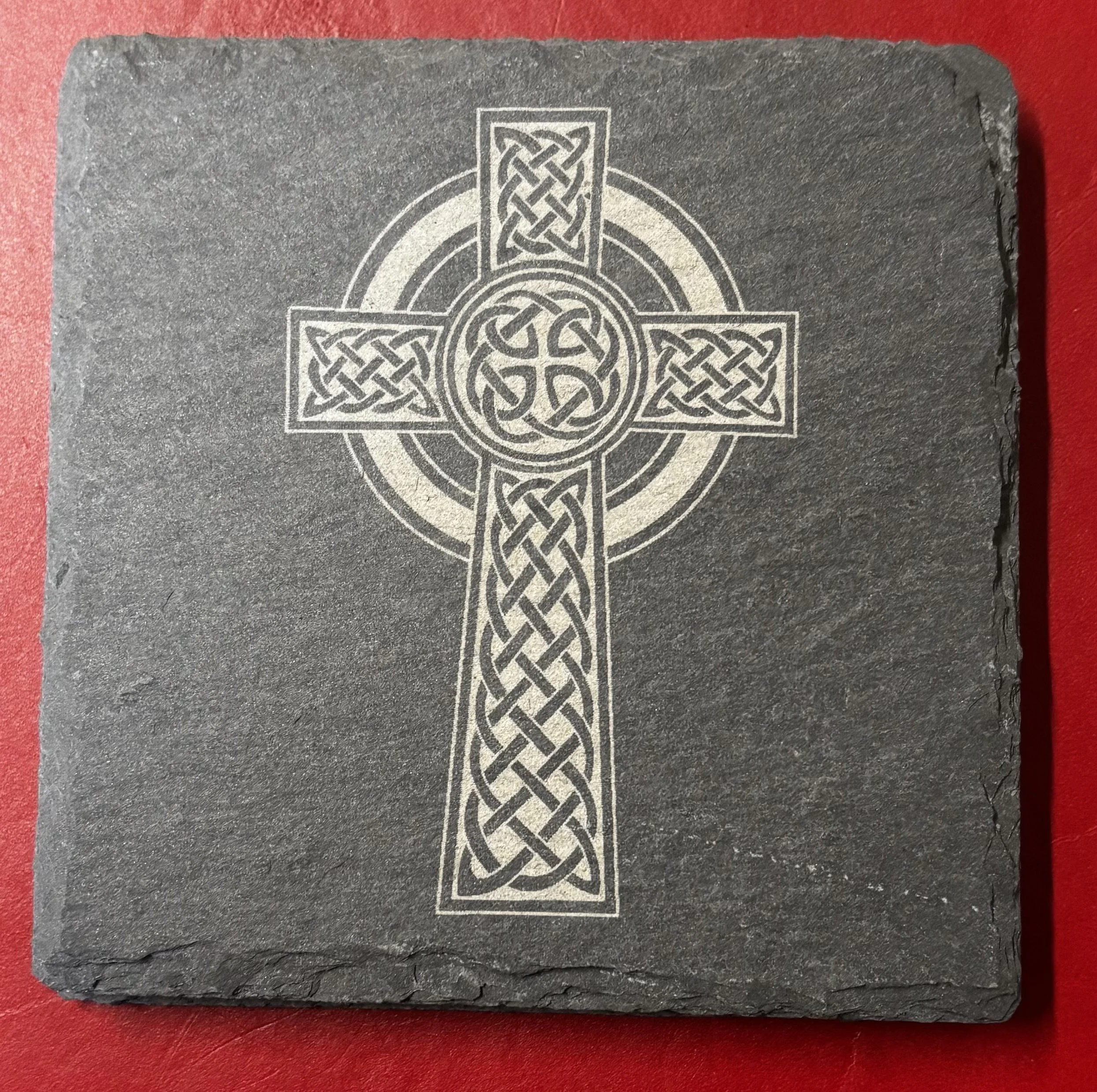
The Celtic cross isn’t strictly a knot in itself, but it does feature intricate Celtic knots. The Celtic cross, also known as an Irish cross, is a crucifix that features a circle behind the four points of the cross, making up four semi-circles. Most Celtic crosses also feature intricate knot designs along the beams of the cross.
It’s one of the best-known examples of the Celtic cross. It’s commonly found in graveyards, both in Ireland and Scotland.
It’s often believed that Saint Patrick introduced the Celtic Cross, but there is some evidence that it was used in Celtic culture long before the Christian influence on Celtic culture. Therefore, the cross has both religious and secular meaning.
In Christianity, the cross represents the crucifixion of Jesus, his life and his teachings, while in the Pagan religion, it was symbolic of the four elements. It was thought of then, as a meeting place for divine energies.
The Celtic cross isn’t strictly a knot in itself, but it does feature intricate Celtic knots. The Celtic cross, also known as an Irish cross, is a crucifix that features a circle behind the four points of the cross, making up four semi-circles. Most Celtic crosses also feature intricate knot designs along the beams of the cross.
It’s one of the best-known examples of the Celtic cross. It’s commonly found in graveyards, both in Ireland and Scotland.
It’s often believed that Saint Patrick introduced the Celtic Cross, but there is some evidence that it was used in Celtic culture long before the Christian influence on Celtic culture. Therefore, the cross has both religious and secular meaning.
In Christianity, the cross represents the crucifixion of Jesus, his life and his teachings, while in the Pagan religion, it was symbolic of the four elements. It was thought of then, as a meeting place for divine energies.