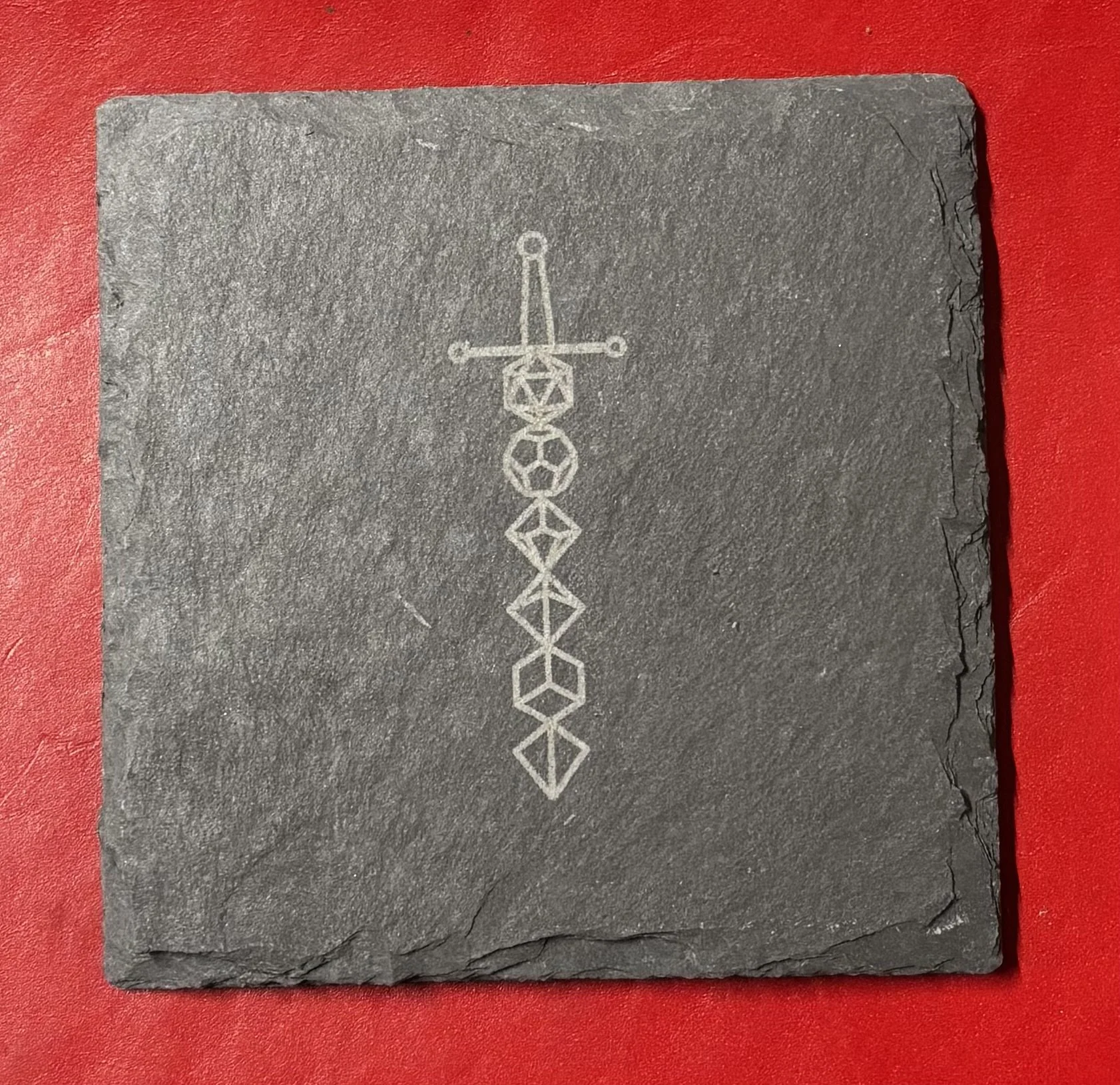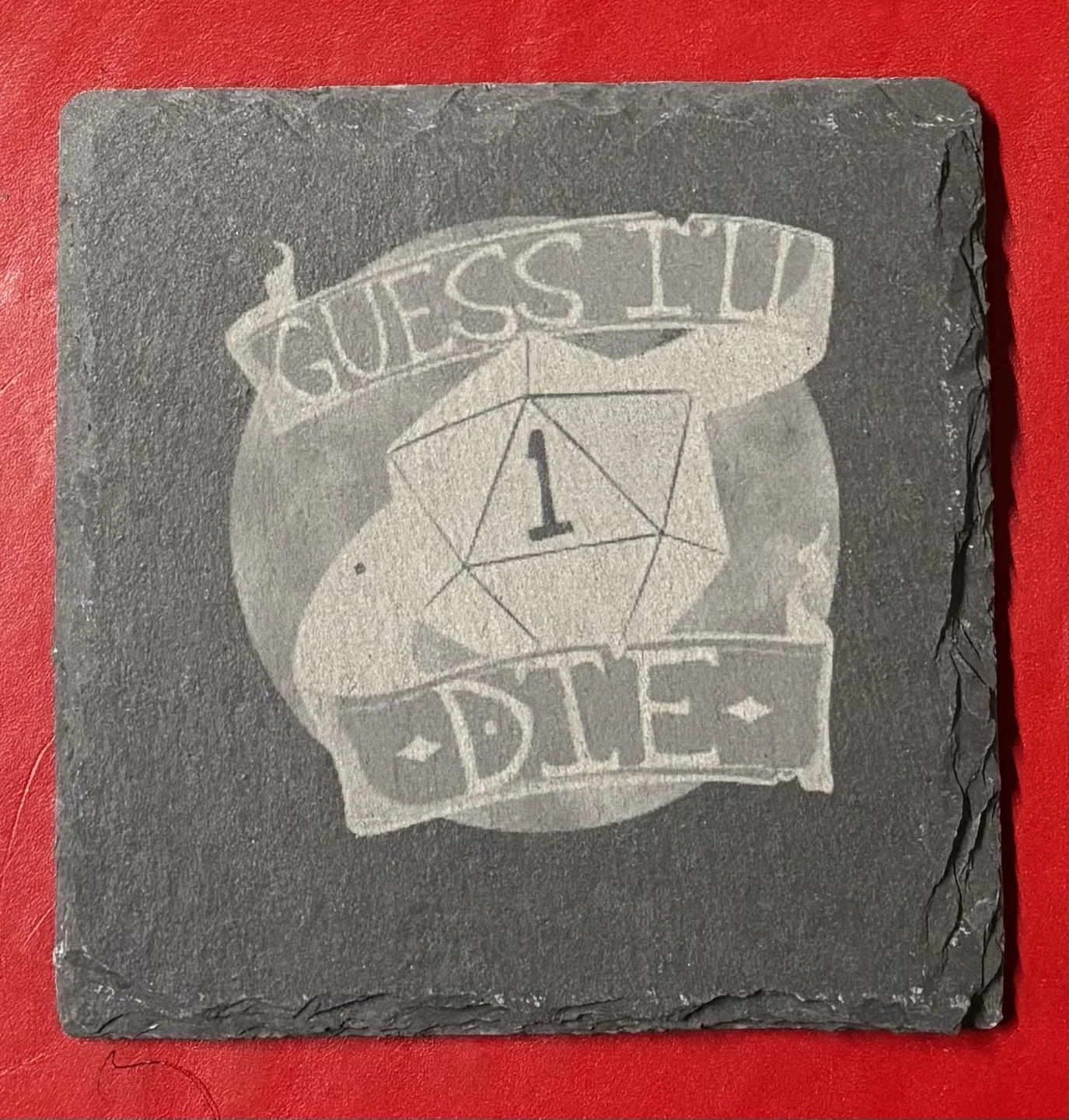
Slate Coasters
Measuring 10 cm x 10 cm
Custom work is also available
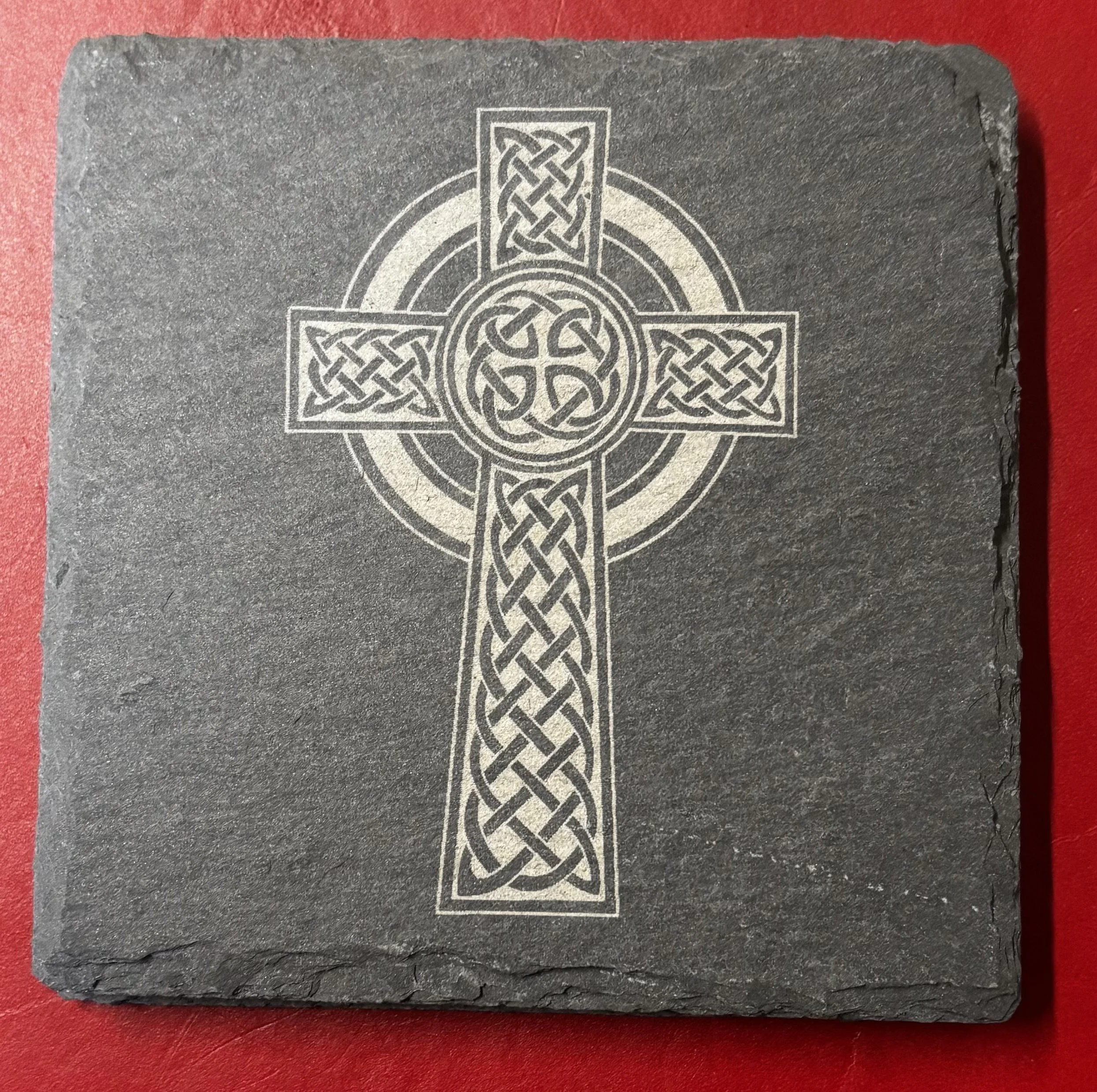
The Celtic cross isn’t strictly a knot in itself, but it does feature intricate Celtic knots. The Celtic cross, also known as an Irish cross, is a crucifix that features a circle behind the four points of the cross, making up four semi-circles. Most Celtic crosses also feature intricate knot designs along the beams of the cross.
It’s one of the best-known examples of the Celtic cross. It’s commonly found in graveyards, both in Ireland and Scotland.
It’s often believed that Saint Patrick introduced the Celtic Cross, but there is some evidence that it was used in Celtic culture long before the Christian influence on Celtic culture. Therefore, the cross has both religious and secular meaning.
In Christianity, the cross represents the crucifixion of Jesus, his life and his teachings, while in the Pagan religion, it was symbolic of the four elements. It was thought of then, as a meeting place for divine energies.
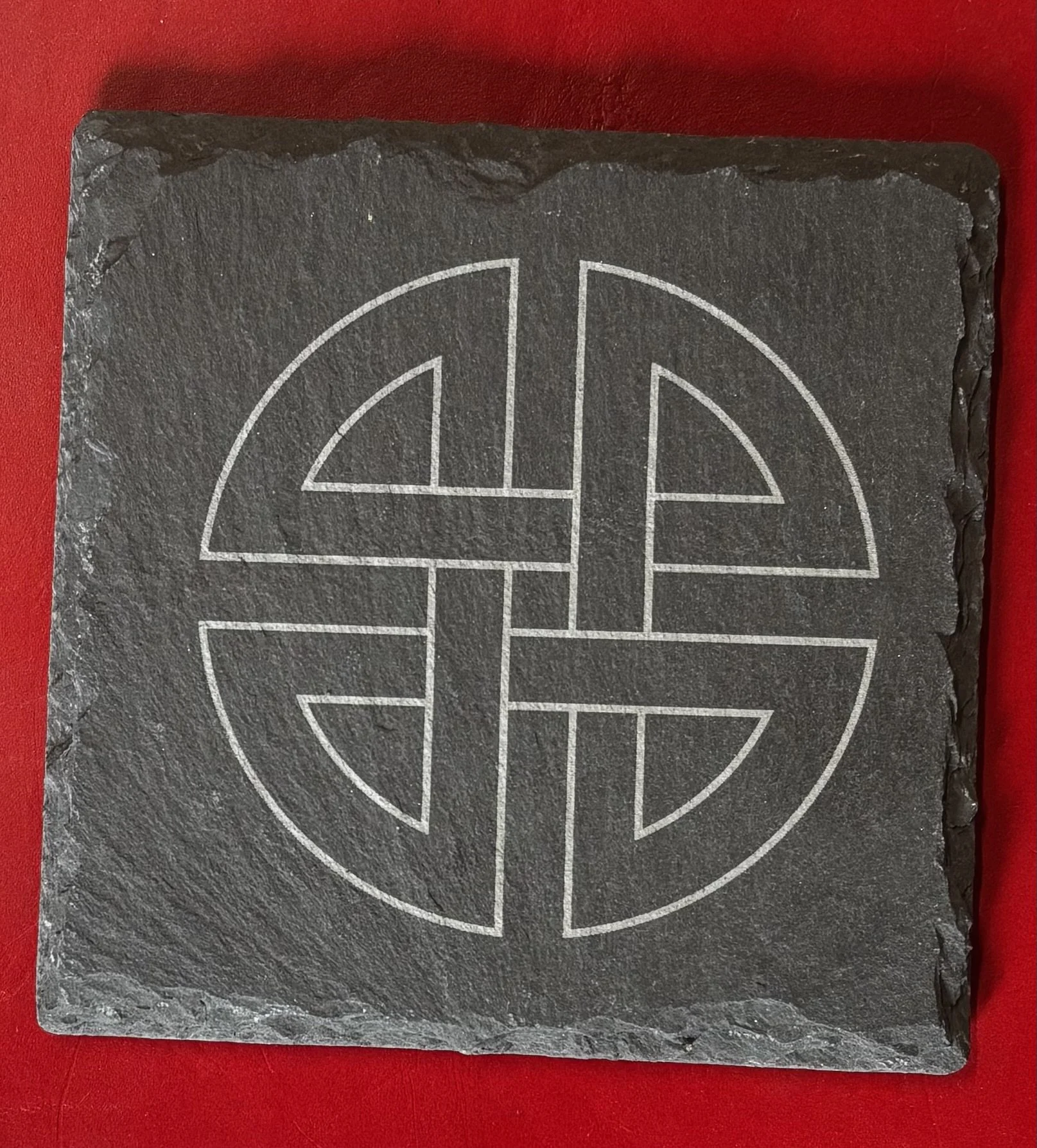
The Celtic shield knot, as the name suggests, looks like a shield. It has a circle with four quadrants, with interwoven lines connecting each of the four distinct corners. They connect in an unbreakable bond, symbolising protection.
The shield Celtic cross was often used in battle, and it’s also traditionally been given to sick people to ward off evil spirits. For the same reason, it can commonly be seen adorning tombstones.
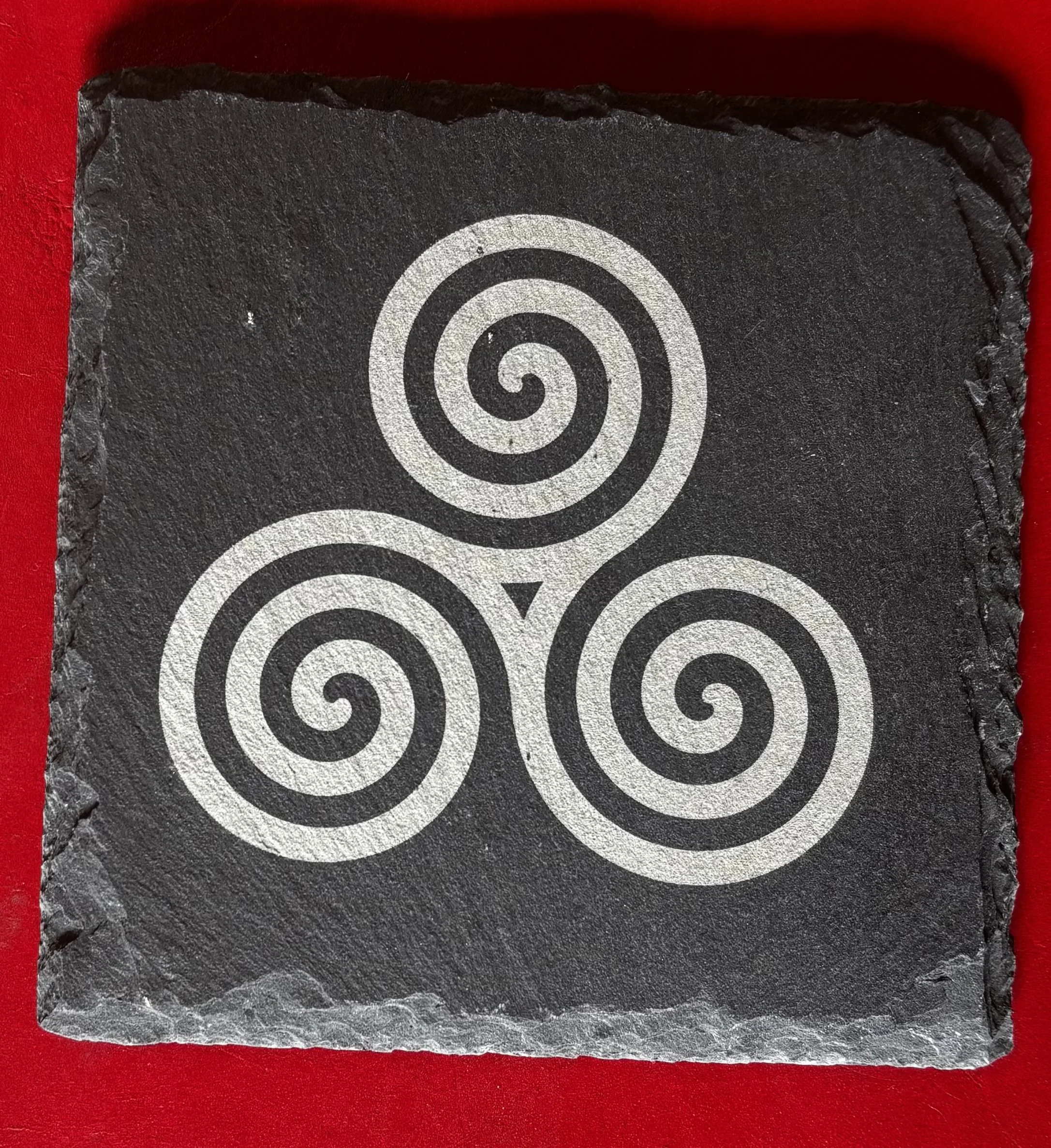
The spiral knot is one of the oldest Celtic knots. It’s a three-sided knot, with one line that splits into three separate spirals. It’s also known as the triskele or triskelion, and is thought to date back to around 3,200 BC!
It’s a reminder once again of the symbolism of the number three in Celtic culture. The word ‘triskele’ in Greek means three-legged, and again, it can stand for a number of different trinities. Some believe it stands for water, fire and earth, while others think it stands for the Holy Trinity.
The single line of the spiral knot highlights the interconnectedness of life and spirit, and it can often be found in spiritual places such as monuments and places of worship.
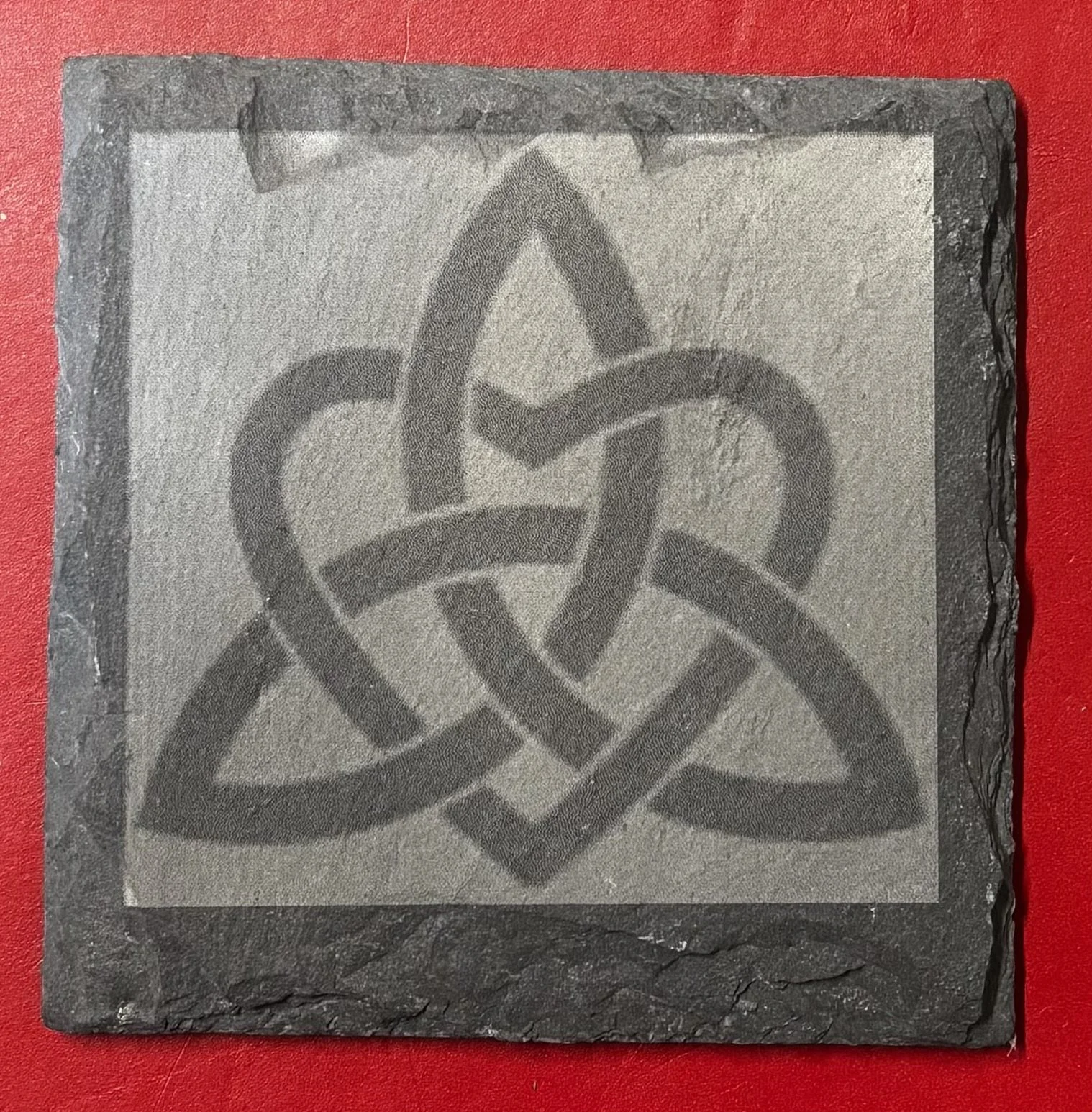
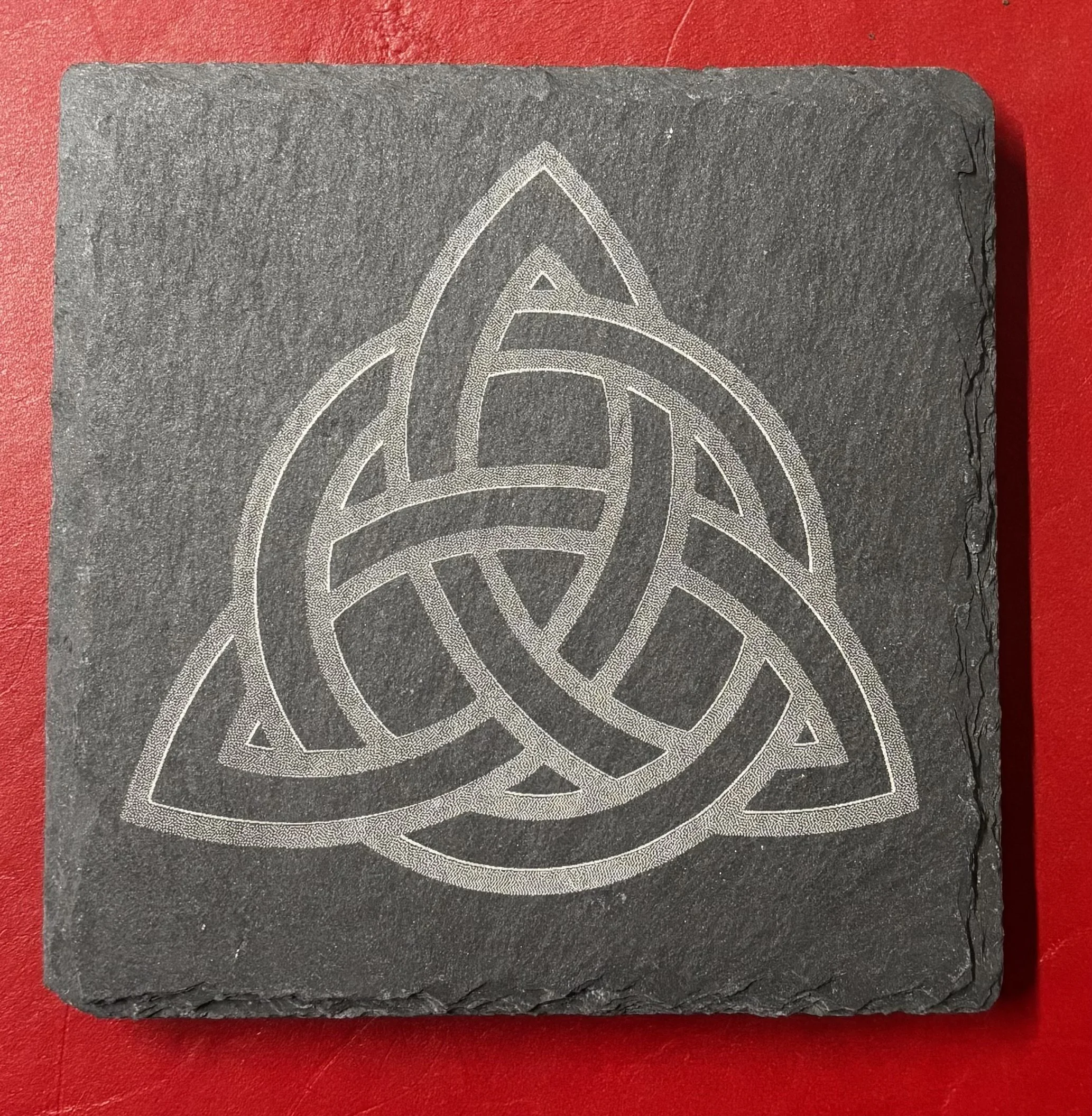
The trinity knot, also known as a triquetra, is one of the most easily recognisable Celtic knots. The trinity knot has three overlapping, and interconnected oval loops. That’s where its name comes from, as the meaning of triquetra in Latin is ‘three-cornered’.
So, what’s the triquetra meaning? It’s thought that the three loops stand for the Holy Trinity of the Father, Son and the Holy Spirit. However, the number three was significant in Celtic culture, as it’s thought that everything came in threes.
The knot, therefore, could also stand for other trifectas, such as the past, present and future; earth, sea and water; or life, death and rebirth. It may once have had a strictly religious meaning, but today, many people interpret the trinity knot in a way which resonates with them personally.
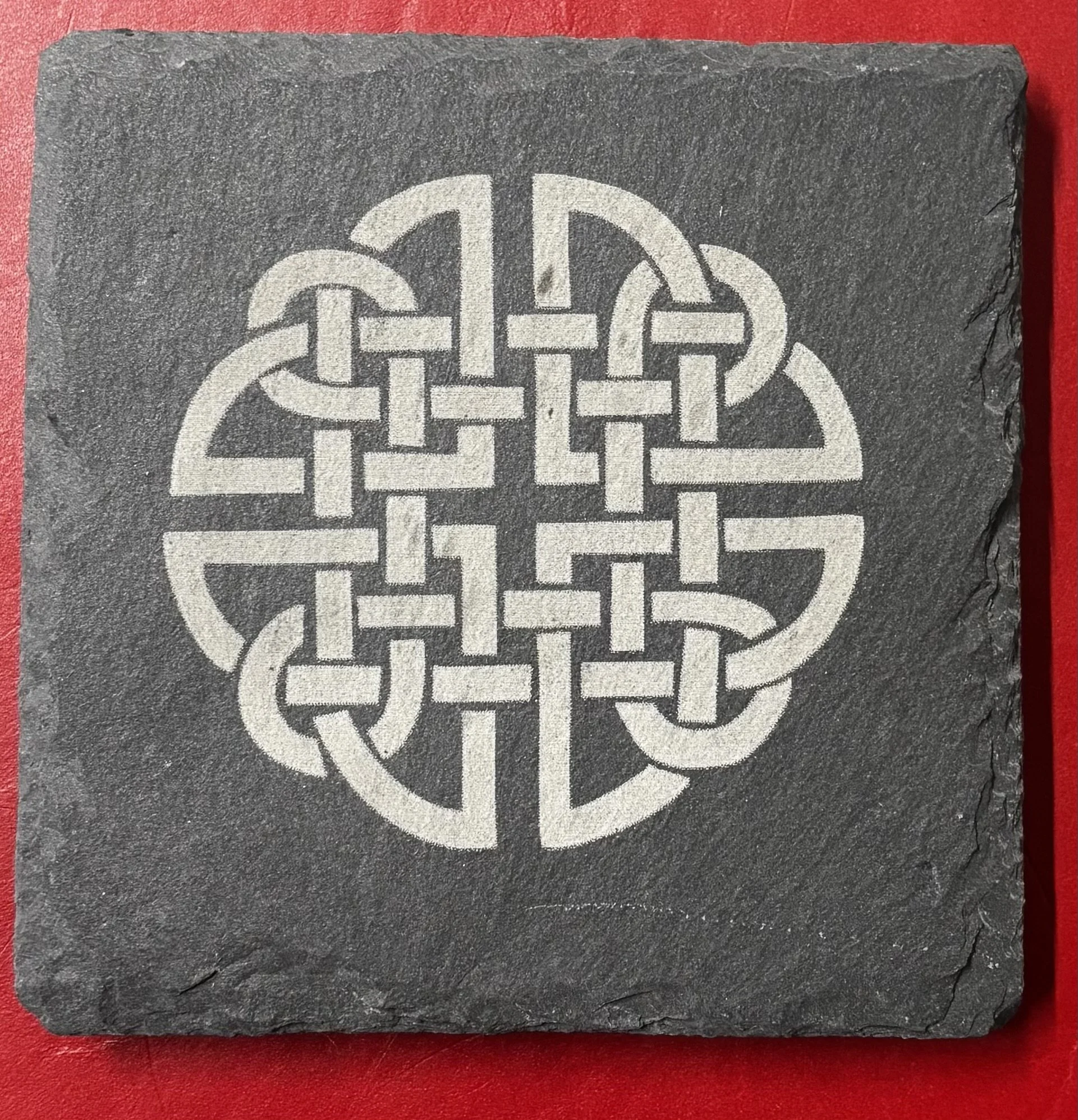
The Dara Celtic knot has an interwoven design that’s influenced by the roots of an ancient oak tree, with an interwoven design mimicking the inter-tangled roots of an oak tree. Indeed, the name “Dara” comes from the Irish word “doire”, which means “oak tree”.
The Dara knot is a modern design, but it’s inspired by Celtic lore and tradition. Ancient oaks were considered in Celtic culture, as a symbol of strength, wisdom and endurance. This is one of the Celtic knots meaning strength, therefore, and was often used on armour and weaponry.
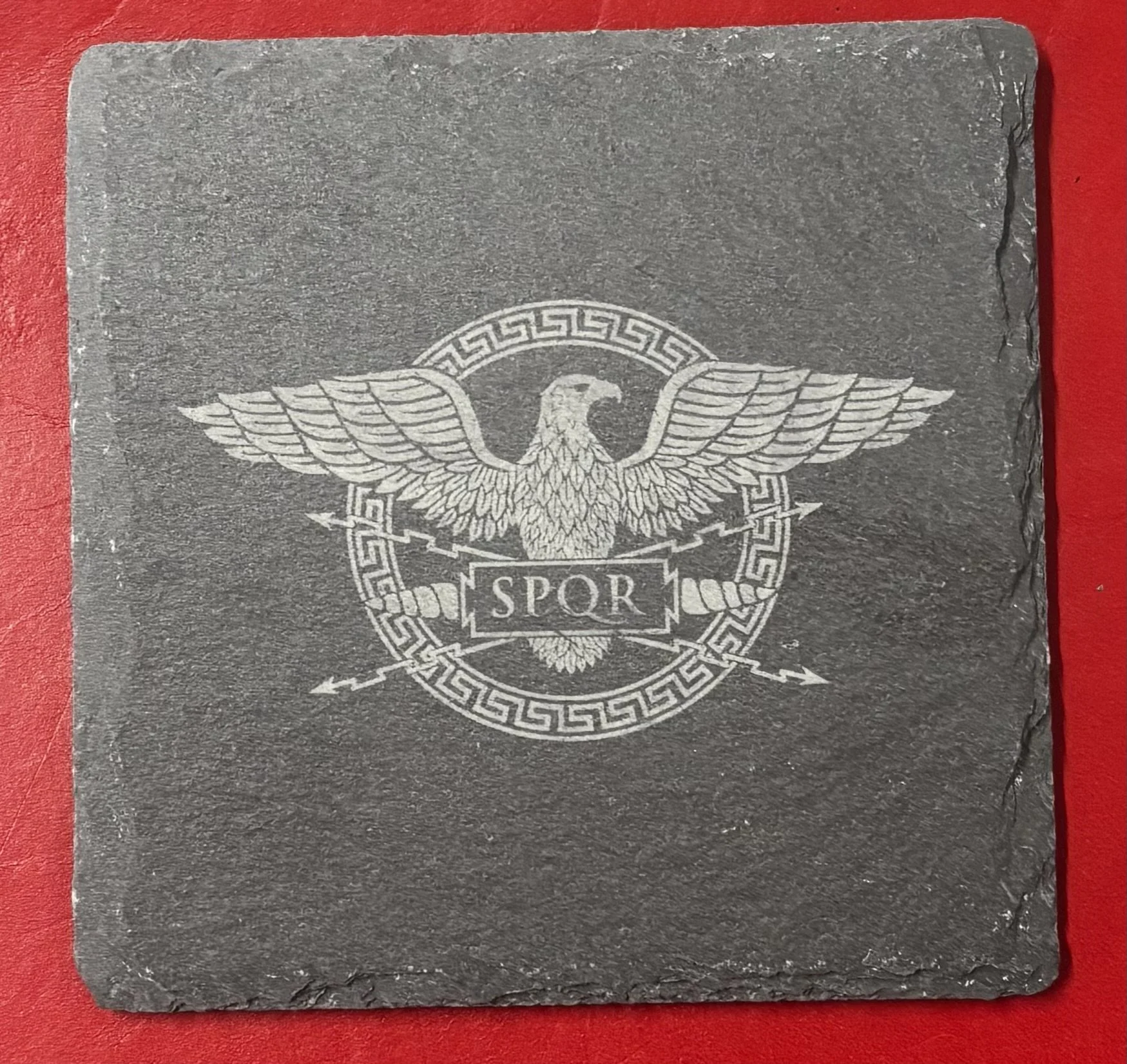
SPQR is an initialism for the Latin phrase Senatus Populusque Romanus, which translates to "The Senate and People of Rome". It served as the official signature, emblem, or motto of the Roman Republic and later the Roman Empire, symbolizing the combined authority of the government and its citizens.